Tuesday, September 22, 2020

Reading Notes.. Divine Archer Part A

 This weeks notes is based off the reading "Divine Archer" by F.J. Gould. This was a very interesting read for sure as the author had a great descriptive writing style. Gould enjoyed explaining situations in the writing especially setting the environment and plot. Here are some bullet points that highlighted the reading for me. 

Part A

  • Rama and his brothers were born, and Rama proved to be the best among them.
  • Rama is put up to the ultimate task of fighting demons along with Vishvamitra.
  • Rama meets the love of his life, Sita.
  • Shiva put Rama through a challenge. 
  • Rama goes to his limit to win Sita over by completing the challenge of bending a bow. 
  • Rama is put through more challenges in life as his achievements made enemies such as Paras mad. 
  • Rama completes his tasks with Paras as well, and earns their respect. 
  • Rama wants to become a King. 
  • Rama ends up exiled from the kingdom for 14 years. 
  • The king was forced to relieve a curse. 
  • Sita tries to leave with Rama but is not allowed to. 
  • King Dasharatha soon dies after the exile of Rama. 
  • Bharata is introduced as the son of the issue. 
  • Bharata finds Rama and tries to return him to home.
  • Rama has other plans and declines the offer. 
  • Rama is put through a forceful marriage by a witch or demon. 
  • Ramas brothers come for the rescue as they fight the drama. 
  • Rama is tricked by Ravana. 
  • Ravana kidnaps Sita to mess with Rama. 
  • Rama and Sugriva team up to talk to Vali. 
The story was overall great, and exciting to read. It showed a great plot line and drama that made the reading adventurous.

 Author: Cornelia Blakemore Warner Fund, Date: 490, Description: Divine Archer, Divine Archer.

Monday, September 21, 2020

Storybook Plan

 Storybook Plan

Initially I was going to create a storybook following a theme around Roman and Indian Gods and mainly use Zeus as the backbone of the storybook. But more thinking got me on board with the portfolio idea. I feel more comfortable with the more open minded approach and the freedom I have to create a website with several stories either in the same theme or individual stories. 

So Far in this portfolio I have a rewritten a story from the Ramayana stories. I have gathered several stories from Hindu and Greek mythology which focuses on little stories about Hindu and Greek mythology and the Gods. I am between the idea of having an open portfolio where I could have individual stories or making a theme such as morals, which I found was a common theme. I found myself lost in the rewriting these stories and allowed my imagination to run wild. This was a process I genuinely enjoyed. 

Stories in this portfolio could include relationships like Krishna and Kamsa and the Greek Kronos and Zeus, The two Gods of Thunder between the two mythologies, Holy Trinity and The Greek Holy Trinity, and many more little stories that tie in together. 

I would like my portfolio to follow a unique theme that would allow me to get the most amount of freedom. I believe choosing the theme about morals would serve me well as most of the stories shared in the Hindu and or Greek culture follows a pattern around morals and life lessons. I have also found that most often, these messages are not direct as it is hidden under the subtext of the stories. 


Comment Wall


Click on the LINK BELOW

PORTFOLIO

Click on the LINK ABOVE


(Comments are invited open handedly)


Friday, September 18, 2020

Week 4 Lab: Writers Write

 For my week 4 lab, I decided that it would be a good idea to explore the Writers write page and find articles that might catch my attention. A lot of articles caught my attention, however the articles on "5 Things to Remember while writing a Novel" and "The Edit" stood out to me the most. 

5 Things to Remember while writing a Novel

This post focuses on a few important rules to keep in mind when writing a novel. Writing a novel is a time consuming task and requires a lot of patience and attention. This article focuses on 5 basic yet important rules when writing a novel. First rule is to gather a complete thought or idea to base the novel off of. Your plot could change any second, it is important to stay goal oriented and focus on a certain idea or goal. The second rule is to pay attention to time. Your masterpiece requires time, and this is important. Having a set schedule might help your writing process go smoothly. Number 3 is to have a game plan. Having your plot lines planned out before you write is a great way to stay organized and not jumble your mind with last second ideas that might mess up a perfect plot. Staying in a focused route and having a determined mindset is important as well. Rule number 4 is an unique idea that many authors fly right over. It is to know your audience and your genre. Stick to something of your skillset, this will help you get the most optimal writing to your audience. Finally the post focuses on a very important step, editing. This is a step that every writer will need to master in order to go from a good writer to a great writer. 

The Edit

This short article or story focuses on the steps after you have finished writing a book or project. It helps you ask yourself questions such as have you written the best version of your book, or have you made any mistakes? Editing is a very important role in writing as it helps you catch mistakes you might have previously made. The article explains how "the Edit" is the last step in the process. 

Having an editor is a great start to a writing career, as having an editor allows you to have fresh eyes on a project at all times, thus negating any minor mental errors. Someone else is more likely to catch your mistakes rather than yourself. The article explains how there are different forms of editing, such as developmental editing, proofreading, open communication and more. Either way at the end of the day, editor just want to make you a better writer and only looks into improving your skills. 


Tuesday, September 15, 2020

Reading Notes: Ramayana Notes Part D

     The plot thickens in the last of the reading as is begins with the creation of Rama's bridge. Rama was conflicted with the idea of crossing the ocean to get to Lanka. He witnessed Hanuman leap the gap by using his power, which he lacked. His way to solving his situation is by dealing with the Gods and performing sacrifices to get the God of Ocean on his side. 

    However, attempt to do this was a failure, as the God had no interest in him. He grew with rage and took out his rage by blindly firing arrows and weapons into the water. Hanuman continues to be a bold character in the plot as he hops into battle with Rama and Ravana. Hanuman was a very clever character as he was able to outsmart any situation with the help of his powers. One part of the plot that interested me was when he was able to manipulate the look of Sita so she can be hidden from the public and no one would know.

    Rama is crowned king, and is instantly dealt with a tough choice to make. Sita was looked down by the people and Rama was forced to banish his own wife. Sita left the kingdom and gave birth to two sons, Lava and Kusha. Rama eventually seeks out his wife and son through the help of the Gods and sacrifice. Rama finally found his family and Sita and Rama confess their love to each other. 

    There was many characters seeking drama and revenge. The ending of this story was tragic as the death of Ravana, which was the ultimate ending needed for the story. The story ended with a peaceful trip to heaven, as Laksh and Rama wanted to leave the responsibilities of Earth. 


Reading Notes: Ramayana Part C

Ramayana Reading Notes Part C

Character

    The story introduces Sugriva, which is the monkey king, and Hanuman the son of Wind God and monkey God. 

More Names: Vali, Tara, Angada, Sampati, Indrajit

Plot

    The plot begins with Rama and Lakshmana laving Shabari in search of Sugriva. Hanuman serves as a guide and taken then to Sugriva. Then the quick introduction of Vali, Sugriva's older brother made an appearance in the fight scene in the cave. He was battled with physical and mental trauma. Later a plot battle with Rama, Sugriva and Vali turned out in a death. Vali was killed by a flank from Rama. 

    Search for Sita sends seeker in the direction to Lanka, as this is where Sita is held captive by force. Sampati, which is Jatayu's brother (bird), sends a helping hand by guiding in the right direction. An important plot line in the reading was Hanuman's Leap, as he was conflicted with the truth of his birth story, as well as battles with Rakshasi. 

    Hanuman eventually finds the palace where Sita is held captive, but has a hard time finding Sita. Hanuman finds Sita as well as Ravanna trying to convince Sita to help him rule the kingdom as his wife. This did not sit well with Hanuman. Hanuman was able to convince Sita that it was him by showing her Rama's ring. 

    The plot thickens as Hanuman battles multiple dramatic scenes, as Sita bring more trouble to him. The reading on The Burning of Lanka showed that Hanuman cared deeply for Sita as the city of Lanka is caught on fire and being burned down, and all he can think about is the safety of Sita. Tables turn and more allies turn to enemies. 


Sunday, September 13, 2020

Feedback Strategies from Reading

 Feedback Strategies

    The article written by Adam Grant titled, "How to Give Bad Feedback without being a Jerk" mentions unique point in how a reader can leave a writer in a manner that the writer can seek better improvement. One main role in giving feedback is explaining why you are giving feedback. This allows the writer to not feel "attacked" and makes them feel ensured in a way.  Another key feature you have to think of phycologically is to not put yourself above the writer in order not make him/her feel inferior. Aside from the details mentioned in the article, another way I found out through personal experience is that sometimes asking the writer questions will help the writer get into a brainstorming environment, thus allowing him to answer the original question and even have a chance at improvement with better ideas. 

    Many people do not know their potential abilities, whether it is writing, athletics and or etc. Sometimes people require that extra push or extra encouragement, instead of constructive criticism. The article written by Marshall Goldsmith titled, "Try Feedfoward Insead of Feedback", talks about an essential skill that many leaders require. The article explains how informing people of their ability to do a job or a task is part of the path off achieving goals. A leader carries a role of telling their peers of their performance. The role of a leadership comes with great responsibility. Marshall Goldsmith talks about how people always focus on the past and what has already been done, instead of talking about how we can improve going forward, and learning from mistakes. Just like feedback, feeding forward can greatly improves ones ability, confidence and many more. The overall goal of feedforward is to be make a positive escalation by maintaining a positive mindset. 


Topic Research: Greek and Indian Gods

     Have you ever taken the time to think about how relatable different Gods are in different cultures? Many of them can be referred back to time of the Roman/ Greek Gods and Goddesses and even see a resemblance in the Indian Devas. In the Hindu mythology, the battle between Gods and Asuras (demons) comes down to the source of good and evil. This is similar to the fact that Greek mythology wages between life and death, which is played out by the Gods and the Titans (evil).

Story Topic One

    Topic one will talk about how both mythologies served a similar plot line between the Hindu Krishna and Kamsa and the Greek Kronos and Zeus. I believe this will be a great story telling piece as it ties similar morals and follow the same pattern, thus making the two topics highly relatable.

Story Topic Two

    For topic two I decided to be more specific and isolate into two specific characters of Zeus, The Greek God of Thunder and Indra, The God of Thunder in Hindu mythology. They both share the symbolic thunder and high respect and role. Fun Fact: Both are worshipped on Thursdays. 

Story Topic Three

    In topic three I wanted to stream out a little and focus on a topic that will bring more resemblance between the two mythologies. I wanted to compare the Holy Trinity and The Greek Trinity. This includes Zeus (Skies), Poseidon (Seas), and Hades (Underworld) for Greek mythology. In Hindu mythology, the Supreme Gods consist of Brahma (Creation), Vishnu (Protector), and Shiva (Destroyer).


Story Source: Hindu and Greek mythology

Thursday, September 10, 2020

Week 3 Story

 Authors Note: This story was inspired by the story of Ramayana and the reading for Part A, found on PDE Ramayana. I told the same plot line in the reading and turned it into a dramatic plot between two planets and a battle between the Gods and a King. The kingdom of Koshala and the Gods would serve for the two sides in conflict (Echo and AI). King Dasharatha, the king in the reading is introduced as King Dash in this story. He has the super power to control fire, and he unleashes on cities because of his uncontrollable anger and pain. He battles with the Gods in return of asking for a child, a son to be specific. He learns and important lesson at the end. I wanted to focus in the plot line around the ritual with the Gods and the sacrifice of a horse in return for 4 sons. 

Sacrifice of a Life

On a lovely cold morning on planet Echo, King Dash wakes up once again to his grueling job as a ruler of a kingdom. Several talks around his land of next heir has King Dash in a grumpy mood. He was well respected in his kingdom, but older generations saw him as a fool, because he is yet to pass his seed. The royal King did not have a son, despite him having three beautiful wives. As days and months went along with no success at birthing a son, the King grew in rage. 

The King would often hide his superpower of his ability to control fire with his mind. He grew in rage and would destroy abandoned land to relieve anger. The Gods on planet AI did not like that the King has taken notice to his hidden power and is abusing it. The Gods would send angels down to his planet to ask him to control his rage before they take action. The angels would constantly negotiate with the king, till one day the Gods agreed to grant one wish in return for a sacrifice and an end to his rage and powers. 

The King knew exactly what he wanted as it was his lifelong dream. However the Gods have asked for a life in return and an end to his rage and powers. This was a huge decision for the King. He pondered on the thought for days, till finally he could not bare but to chase his dreams. He ordered the guards to grab a prisoner in order to be sacrificed. He arranged for the ritual to be taken place in order to finally get what he has dreamt of. 

One the day of the ritual the King meets the Gods on a high mountain away from any population. He demand the guards to bring out the prisoner, just to find out that it is a young adult. The King has never taken a life before and he realized how awful of an act he is about to do. The Gods look at the King with shock as the King stares back with confusion. The Gods explained to the King that he cannot leave the mountain top without performing the ritual with his chosen sacrifice. The Gods also taught the King of a lesson how lightly he took someone's life. The Gods were clever in their wording, and told the King that he did not have to chose a human life as it could have been any form of life, however ritual rules stands with the human sacrifice.

The King could not have the guilt of taking an innocent life despite his life as a prisoner. The King stepped down the hill, even though the Gods warned him of this act. The Gods could not take the young man's life, however the Gods punished King Dash for they knew that his anger would only rage further and would cause mass destruction. The Kings death was slow and he died with agony and pain. 


Bibliography: Ramayana Online, Public Domain Edition -- Ahalya


Reading Notes, Ramayana Part A

Bibliography: Ramayana, Various Authors, Public Domain Edition

Character

The story introduces a high king named Dasharatha. This king ruled an entire kingdom, with pride. He had everything he needed. The idea of royalty is to have a blood line following in your footsteps, which the mighty king lacked. His only problem was could not have a baby, even with having three wives.  

More Characters: Vishnu, Shiva, Indra and Brahma (Gods), Ravana, Rama, Laskmana, and more. 

Setting

The kingdoms played a key role in the story. The kingdoms of Koshala and Janaka. 

Plot

Dasharatha works towards his dream of having a son. He does so by engaging with Gods and using their attention and powers for his benefit. This plot carries onto the land of the Gods, and their battles. Ravana, a supernatural cause has plans of his own and his destruction. The plot engages in finding solutions and creating drama between humans and Gods. Sacrifice called Ashwamedha was taken place with a sacrifice of a horse in return for four sons. Although the king was promised 4 sons in return, the Gods were unable to come thru with their promise.Tough choices had to made in this journey of his. Rama and Sita's marriage causes the king to decide his next heir. Dasharatha decided rama to be the next heir, however the force of his banishment and exile causes Bharata to be the next king. Dasharatha realizes his own mistakes and eventually guilt eats him alive, with only karma to blame. 


Tuesday, September 8, 2020

Topic Brainstorm

 I planned on doing my project over the Gods and Goddesses, also referred to as Devas. I feel like this is an important role in the culture and could relate to many topics. These Gods can relate to our existence and even other influences such as religion, traditions and more.  I plan on reverting the Gods and tying in their powers, stories and morals to a more modern and relatable topic. 

For example I could potentially match the powers of Gods into movies with superheroes. Many topics regarding this topic can be found on the "Marvel Database". I could create multiple versions of stories in relation to Gods. The wonderful aspect about these stories, is that I can make it relate to other aspects of the culture such as animals. 

Animals have been a basis of many of the stories we have learned in this class so far. The Jataka Tales we learned about showed a great insight into the moral values and themes being taught at the end of these stories. I can relate this easily to another story. Animals are in many stories and some stories match up to the animals behavior. The website title "Jataka Tales" shows many stories with various different animals. 

The traditions that was created due to Gods is amazing to see. Indian storytelling has a unique way of grabbing the reader's attention with emphasis. These story seem exaggerated, however has a deep meaning. "Gods & Stories from Indian Mythology" shows stories of creation in relation to the Gods. Gods have important roles in cultures and like seen in the movies such as Zeus, the God of the sky and thunder. Similar stories relate to the Indian Gods. 

Final topic to talk about it the Battles and the impacts that Gods had in them. Especially with the weapons of the Gods. All topics in regards to superpowers, weapons, and even certain behaviors in terms to animals. "List of mythological objects" shows a list of all weapon used by mythological stories. I found this topic of interest due to the different types of relationships to Gods and especially the people of the culture. 

Monday, September 7, 2020

Week 2 Story... The Passage to Heaven

  The Passage to Heaven

The Passage to Heaven

There once lived a man who claimed he could take anyone to heaven. His name was Christopher, he used his good looks and his conversing ability to convince people that he was true to his word. He fooled many people into thinking this journey was to heavy. He was born a Christian, but later in his life turned to the Devils side. 

Christopher real story was a dark memory. He had a tough life growing up, and made a living off of conning and scamming people. He fooled this young man into following his footsteps and convinced him by erasing his memory and brainwashing him into thinking that the dark side is good and is his life passion. He turned many people. The victims can only be reversed back to normal if Christopher is turned back to the light. This is a hard task and requires a helping hand. 

One quiet night, Christopher walks into a restaurant to get some dinner. He seeks out for more victims as that was his true hunger. He sees a gentleman with long blond hair in the corner praying before his meal. Seeing this angered Christopher. However he remained calm and enjoyed his meal. He plotted a plan to fool this man. Christopher has always been a mastermind at scenarios and making them play out in his advantage. He told his waitress that he wanted to pay for the gentlemans meal and wrote his name and number on the receipt. This was all part of his cunning plan. 

Two weeks went by, the gentlemen did not make any contact with Christopher. He went wild, and went to the restaurant everyday hoping to see him again. Finally as time passed, he ran into the gentleman at the same restaurant. Christopher introduced himself as a up coming pastor. The gentlemen spoke up and introduced himself as Joshua. They began conversing, and quickly Christopher realized that fooling Joshua would be hard task as Joshua spoke with such wisdom. 

Joshua spoke to Christopher with such strong words of wisdom from the bible, that Christopher began to remember his childhood and how his mother would take him to church every sunday, and how he attended bible school. Joshua was able to shine light onto some of Christophers hidden memories that even he had forgotten. Christopher started feeling the guilt of every single soul he turned. Christopher could do nothing but submerge in his dark sorrows. Joshua was able to attack his darkness with light. 

Christopher began walking home with Joshua, and built an instant relationship with Joshua. Joshua explained to him how, there is only one final destination in life, and no man or women can predict when. Christopher began to wonder when his time will come, and whether it would be heaven or hell for all his sins. After a short walk to Christophers house and one short conversation after, he stops at his doorstep to thank Joshua for the walk home, just to realize that Joshua vanished. 

Little did Joshua know that he turned Christophers dark soul into light, thus changing all his victims back to their regular self. He met up with all of his victims and apologized, and began to go to church with all of them. The victims were nice enough to forgive Christopher. 

Moral of this story is to learn that life can end at anytime, and to not drink from the same pool as others. Joshua was able to not sunk into the lies of Christopher. He was able to outsmart Christopher and shine light to his mind and make him realize that his sins are wrong. 


Note: 

    The story of the Cunning Crane and the Crab allowed for the birth of this story. Christopher in this case served as the Cunning Crane, while his victims played the role of the fish. Joshua in this case was Jesus himself. Joshua was the crab that was able to outsmart the Crane and put an end to his cunning acts. 


Bibliography. "The Cunning Crane and the Crab" from The Giant Crab, and the Other Tales from Old Indian by W.H.D. Rouse. Story Source.


Sunday, September 6, 2020

Week 2 Reading Anthology, Jatakas Story


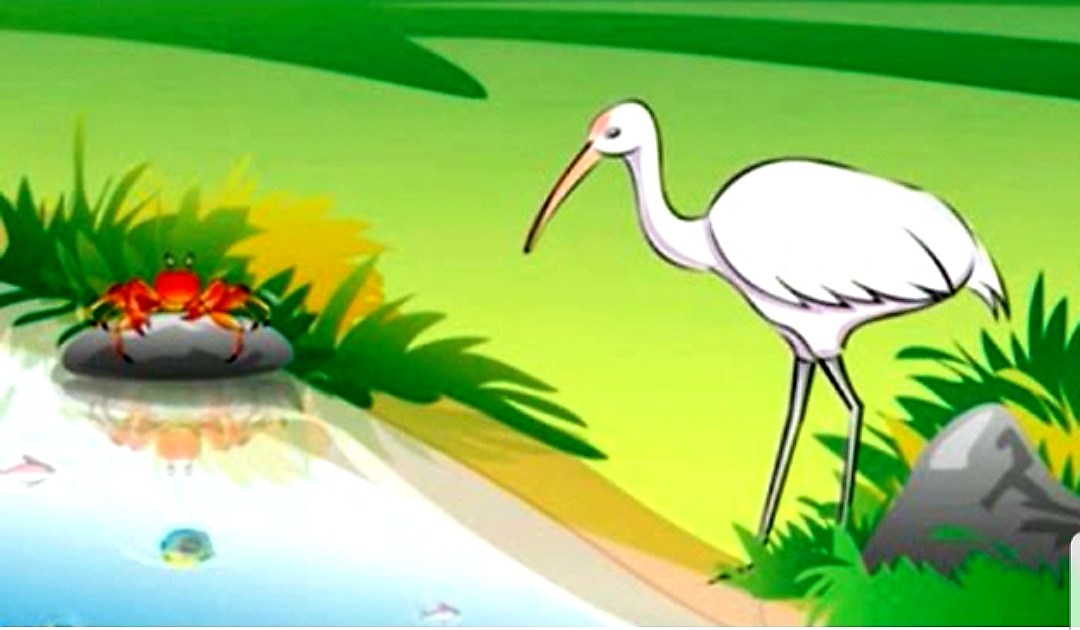
 The Cunning Crane and the Crab

    Story Source: The Giant Crab, and the Other Tales from Old Indian by W.H.D. Rouse.  

    This story from the old Buddhist Jatake collection tells of a cunning crane and his almost brilliant plan of fooling dying fish to their deaths. This is true until a clever crab seeks help from the crane. The story teaches the basic moral of not getting outsmarted and fooled. It teaches you to always be smarter than your enemy. 

    This story had a very interesting plot line, which drew my attention. I chose this story for its moral theme and life lesson. It has a great meaning and I believe I can recreate a story that follows the same life lesson in order to get the point across. Instead of following the same exact plot line and recreating the same story with different characters, I want to focus on the moral value that is being taught.