Showing posts with label Reading. Show all posts

Wednesday, November 18, 2020

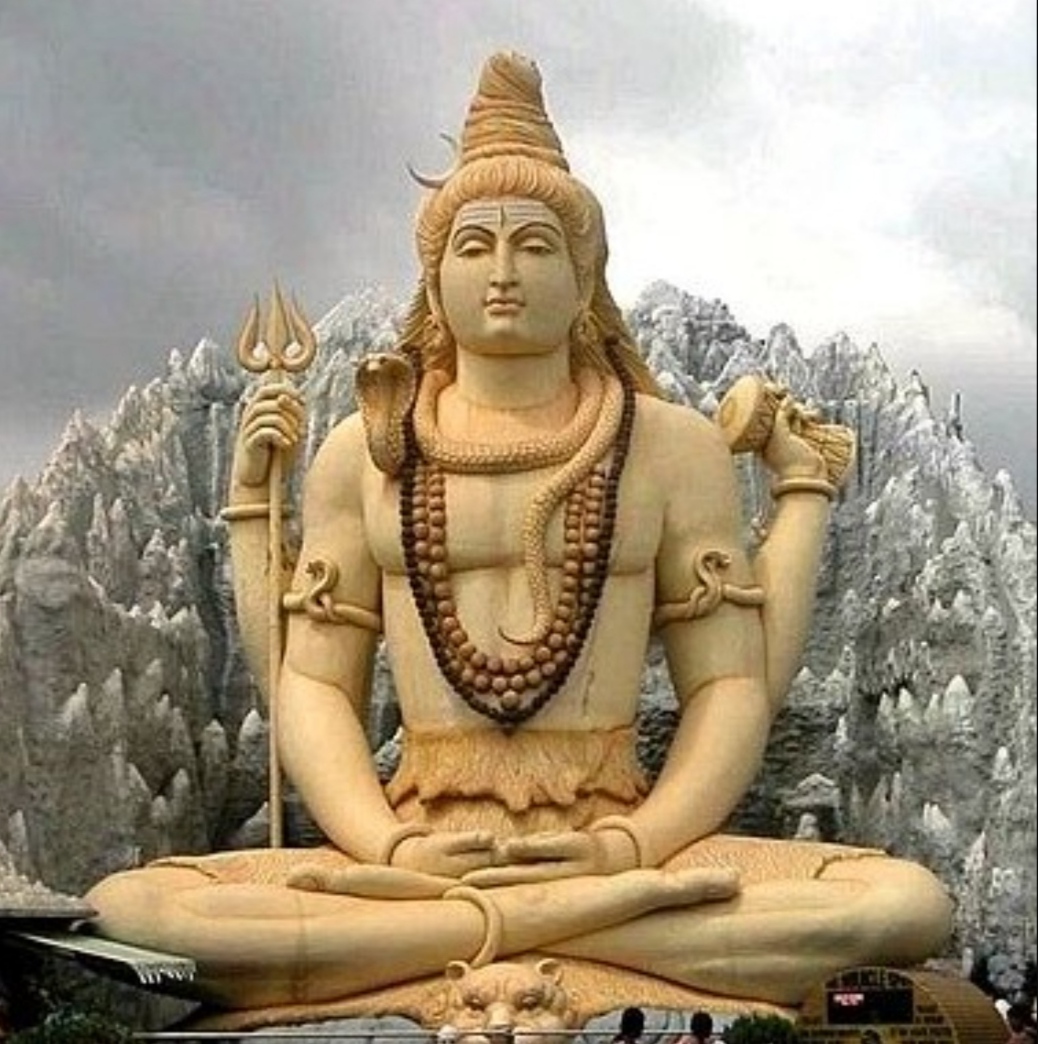
Week 13: Reading Notes Part B: Seven Secrets of Shiva

 Part B of this reading continued is pretty interesting. I chose to prioritize my notes on the character Kali. She is shown as a bold and strong character, she was even portrayed standing on top of men. Kali is known to switch forms and shape, one of which is a snake. Although Kali looks to be dangerous and scary, the introduction of Shiva made all that look harmless. Shiva was able to have an emotional and physical connection with Kali. The true lesson to be learned in this story is to not judge a book by its cover. The bond between Kali and Shiva was somewhat unbreakable. Kira was looked as a hero at some instances. Kali has a way of winning over people and making them second guess. There was a mentioning in the story where Krishna had a encounter with Kali. Krishna was amused by this strange character, yet not threatened or intimidated. There are many versions of people in Hindu stories, which applies to Kali. Although the bond between Kali and Shiva was unbreakable, there is still a strong standpoint and meaning in the picture below, where Kali is standing on Lord Shiva. Overall I really enjoyed the story and the meaning behind it. 


Bibliography: Pattanaik. Seven Secrets of Shiva. Source


Week 13: Reading Notes Part A: 7 Secrets of Shiva


 For this week I chose a little different topic, this one being Shivas 7 secrets. This story resembles ancestry, religion and ritual. It is an attempt to show God Shivas journey through trials and to unlock secrets. It goes through a labyrinth of myths and cultural aspects. It was a very interesting reading for sure. The artwork that is incorporated in the story is incredible to see. Overall I would give this story a 9/10 because of its uniqueness and interesting objectives. I would like to write a story about this in the near future. 


Bibliography: Pattanaik. Seven Secrets of Shiva. Source

Wednesday, November 11, 2020

Week 12 Reading Notes: Part B Krishna

 Part B of the story of Krishna starts with the punishment of Brahma, after he had kidnapped Krishna's cows and friends. Krishna decided to teach him a lesson and played a trick on him. Krishna made the illusion that nothing has gone missing and nobody noticed a difference. The creator of the universe fell to his knees as he found out that Krishna was everywhere he looked. He finally kneeled to Krishna's' divinity. Krishna was refused marriage as his existence was for a higher purpose. He was the savior of Dharma in this world. Krishna was still unaware of the fact that he was not the son of Yashoda and Nanda. Krishna's realization of the truth pushed him down the same path that Gargacharya mentioned. The residents of Vrindavan and the Gopis did not want Krishna to leave. They mourned and cried of his farewell. Krishna overcomes the lives of others with his presence. Akur invited Krishna as he saw the reality within Krishna. Krishna arrives at Mathura, and gets to meet his destiny by killing Kuvalayapida. He finds freedom for Mathura by killing Kamsa. 


Bibliography: Reading Guide: Epified. Krishna


Tuesday, November 10, 2020

Week 12 Reading Notes: Krishna

 This story talks about the life of Krishna, who was a boy that had trouble with his life even before birth. He had many foes and friends. He made allies with the ones that helped his journey and enemies with the ones that hated him. Either way, he was brought up with fire and troubleship. However he survived and became much more than a king and a ruler. Many did not grasp the idea that he was in his own world, and was not the same as them. One cruel king in the name of Kamsa showed no respect and decided to kill all of Devaki's children, six to be more specific. Yashoda the mother of Krishna, saw more than potential in Krishna. One day as Krishna was eating mud, she demanded to see inside his mouth, where she saw a whole universe. It is at this moment she realized that she was not mother to a normal child but to Brahmand itself. This was an important part in the plot, there is where you see Krishna take a turn in character. He builds his character immensely. With a change of scenery, Krishna was able to make friends, take on new lessons in music and truly find himself. He picked up quickly on the flute, which is a big part of his character. This is the moment Krishna turned from a mere boy to an avatar to everyone around him. He was able to save his friends from a vicious water snake with his melody and music. Kamsa has much to worry about as his fate lies on the hands of Krishna. However, while Krishna is still a young man, he has a while to go before challenging a mighty king. 


Bibliography: Reading Guide: Epified. Krishna


Wednesday, November 4, 2020

Week 11 Reading Notes: The Banyan Deer

 The Banyan Deer story was a great story with a beautiful ending that shows true character and pride. The story begins with a Deer who was a King and ruler of his herd. However the Banyan Deer is not the only King as other herds are ruled by a King as well. The Monkey Deer herd had a ruler with a viscous taste for deer meat. The King was so hungry for deer meat, he woulf often hunt and kill many deers. One day the people of his town got fed up with his addicting taste for blood and decided to let him do all the work. The people of his town was able to lure deer into a park, where it was designed as a trap for deer. The Banyan Deer explained to the King that killing this much deer would eventually wipe out all the deers, and nothing would be left. The King understanding this ordeal made a deal with the Banyan Deer that he would limit his killing by allowing for the release of a deer as another enters, this was "fewer Deer will be lost". However at the end, when a mother Deer begged for her life due to her child needing a parent to raise him the Banyan Deer takes her place to be killed. Even after the King granted the Banyan Deers' life, he still chose to take the spot of a strangers life as it was his responsibility for his herd. This act of kindness and mercy shined light to the King as he swore to never hunt Deer again. 


Wednesday, October 21, 2020

Reading Notes: Mahabharata: Arjuna and Karna, Part B

 For part B of the reading notes, I decided to focus on the plot with the battle between Arjuna and Karna. I chose this fight scene to create tension between characters, and this allows me to have a wider range of options for my portfolio. In this section, I found the main characters to be Arjuna and Karna. These two gets into a quarrel with supervision from Krishna. Arjuna makes the first move toward Karna, where Karna finds the upper-hand first. Karna breaks Arjuna's bow and charges towards him. Arjuna was supposed to be given a new weapon according to the rules of battle, however, Karna did not allow for this to happen. Arjuna manages to fix his bow and charge towards Karna, where Karna finds himself in a similar situation as Arjuna. Karna's chariot wheel gets stuck on the ground, and Karna asks Krishna for respite, which was denied. Arjuna gets the final blow to Karna with an arrow, thus ending the battle between the two. This story is great for understanding fairness and non-greediness. 


Bibliography: Mahabharata, Section 11: Arjuna and Karna


Tuesday, October 20, 2020

Reading Notes: the Adventures of Prince Arjuna, Part A

For this this week's reading notes, I decided to stick to the story of Prince Arjuna. I plan on making a story in terms to this story, which sparked my interest. In the Mahabharata reading guide, the story titles "The Adventures of Prince Arjuna" tells of a Arjuna, son of Pandu and Kunti. He was a prince of the Elephant city. The location of the plot starts at the royal city of Hastinapura, Duryodhana. The Pandavas bring problems to the royal city and the King. Arjuna finds himself in a situation where he enters Draupadi's room, which causes him to go to exile.  A water-nymph named Ulupi takes Arjuna to the underwater land and marries him. This granted Arjuna with a special gift that allowed him to defeat a mighty alligator, who was an ex nymph. This curse was broken by Arjuna when he defeated the cursed alligators. Arjuna is challenged once again in life as he dreams of Agni, a fire-god who tells him to burn the Khandava forest and to destroy the nagas. The nagas are protected by Indra. Arjuna is also the son of Indra. As Arjuna heads to destroy this forest and the nagas, the god Indra comes to do his job and save the nagas by releasing rain from the clouds. 

This plot shows great marks of improvement. While reading this original story, i was able to think of ideas to make a new revised story for my website, which is perfect. 


Bibliography: Mahabharata, The Adventure of Prince Arjuna


Wednesday, October 7, 2020

Reading Notes: PDE Mahabharata Notes Part D

 Reading Notes Part D: The Mongoose

For this week's reading notes part D, I chose to write my notes over "The Mongoose". I chose this part of the story because it introduces a new character to the plot that added much meaning. The mongoose was found entering the city with a half golden body. The mongoose spoke up with a beautiful story. The story was of the Brahmin. The man lived off the farm with his wife and kids and eventually, hunger took over due to them only eating corn once a day. They were always hungry, yet they were never greedy. They even fed a guest with their small portion of food. The family fed all their food to the guests to please their appetite. This mark did not go unnoticed as the gods saw this and pleased the family with the blessing of living a worry-free life. They were gifted with the ultimate saving of heading to heaven. The mongoose turned to gold shortly after telling this story. This story shows caring, giving, and praise. The family was kind enough to put their own desperate hunger aside to please some random guests. This good service in return was blessed, thus showing that kindness does not go unnoticed. Be a kind person in the world, and you can change much more than just one life.  


Bibliography: PDE Mahabharata


Reading Notes: PDE Mahabharata Part C

READING NOTES: PART C 

For this week's reading in the Mahabharata, I chose to stick to the plot in the story, where the setting was in the forest and the introduction of Krishna's visit. In this section, you will find Yudihishnthira goes about his destiny into the forest. He had a battle with the brahmins. They were to fight through tough battles with creatures, and better yet hunger. They were to survive on their will to live. The gods play a huge role in this story. The sun gods help Rajah and Yudhishthira in their journey. The sun gods provided them with the gift of food, enough for 12 years to survive with their wives. They did not take the help of the gods easily. They went praying and sent offerings to the gods at temples numerous times. 

Krishna finds his way into the forest with the Pandavas. Krishna was served with the possession of a slave. The slave begs to ask for forgiveness and saving. It was not the job of the husband to save the wife, which is what happened. Draupadi was not saved as she wept. Draupadi questions the gods as to why they would let this happen. This led to war with the demons and how a husband would not look out for his wife and his love. Draupadi wants nothing but revenge. However, Arjuna fights back with the weapons in the collection. Krishna plays a key role in the plot where he tries to find an equal balance between Pandavas and the Kauravas. Krishna attempts to bring them together. 


Bibliography: PDE Mahabharata


Wednesday, September 30, 2020

Reading Notes, Mahabharata Part B

 Part B of this reading was an interesting plot twist and showed great dramatic tension between characters. I chose to write notes over "The Gambling Match" as it caught  my attention. The plot thickens with the Pandavas brothers and the conflict with Duryodhana. He os overwhelmed by the power of the brothers and the conflict. Later the gambling games is introduced as Shakuni shows a bright future in the game with loaded dice. The gambling match was held at the pavilion after much debate. Many gathered to watch the match. The match rules were set by Yudhishthira. Duryodhana works greatly with the stakes while his partner Shakuni throws the dice. This did not settle nicely with Yudhishthira due to it not being a normal playing style. Yudhishthira's greedy playing style forced him to gamble away a lot of his belongings. He lost many vial playing cards such as his slaves and even kingdom. He set himself up for utter failure. This is a never ending cycle, as Shakuni was once a slave to the trade game. The story ends with Draupadi taking a win by Duryodhana. The winning included many slaves, which was ordered to come and sweep the chambers with others. Vidura was not happy with this idea and says that the Draupadi was not to be his slave due to Yudhi. Final ending showed the Duryodhana was cursed and the birth of a royal slave occured. 


Tuesday, September 29, 2020

Reading Notes: Mahabharata, Part A

This was most definitely an interesting read as many new characters and setting take place in the plot. You are introduced to many characters such as King Shantanu, Goddess Ganga, Vyasa, Devavrata, Bhishma, Pandu and many more. 

I chose to focus on the story "Pandu" as the title "The Sons of Pandu" caught my attention. In this story, it introduces the story of Pandu and his wives and sons. Pandu was known to have multiple wives and sons. The sons were supposedly the Gods creations and not Pandu's blood. The story also introduces Kunti the mother of Yudhishthira, Bhima, Arjuna, whom was seed to Dharma, Vayu and Indra. Later the two additional introduction of two more sons, Ashwins. These five became the princes known as the Pandava brothers. 

King Pandu had a difficult life ahead of him. He one day met Madri, who was a wife of Pandu. As he enjoys his time with her, he finds himself in a sunken place as the brahmin foretold his tragic death. The Pandava brothers arranged the funeral of the mighty Pandu. His soul was to reach heaven one day. At his funeral, his wives must pick which one of them has to "follow her lord to the region of the dead". Both Madri and Kunti volunteer, however with the terms of the brahmin, Madri must be sent to the realm of the dead. 

This was an interesting plot line and showed great taste of character and drama. I feel like this would make for a great story piece to rewrite and show some creativity. 


 Bibliography: PDE Mahabharata by Arnold, Besent, Devee, Dutt, Ganguli, Kincaid, Macfie, Mackenzie, Nivedita, Seeger, and Tagore. Source. Pandu

Thursday, September 24, 2020

Reading Notes... Divine Archer Part B

 The second portion of the reading "The Divine Archer" by F.J. Gould was short and packed with interesting details about characters and plot. For example we discovered Hanuman's ability to shape shift, which many people found fascinating. Many other actions take place such as the battle between Sugriva and his brother Vali. Rama enters the scene to kill Vali with an arrow. Hanuman is able to make a play and track down Sita in Lanka. Hanuman witnesses Sita have a conversation with Ravana, the trickster. Hanuman finds Sita and informs her that Rama is looking for her. Eventually the two sides end up at war with each other. Rama is able to gather an army and force his way into Lanka. Hanuman joins the army in order to help, as he surely was when he saved Lakshmana's life. Rama is faced with the help of Indra and he was given a plethora of weapons. Rama is able to defeat Ravana and Sita was proven innocent the whole time. It was an ideal ending to the story, and was very much predictable. Once again the voice of the common people made Sita get exiled due to her statue of innocence. Sita leaves the kingdom to give birth to two boys. who meets Rama as he understands his mistakes. 


Bibliography

"The Divine Archer" (1911) by F.J. Gould.


Tuesday, September 22, 2020

Reading Notes.. Divine Archer Part A

 This weeks notes is based off the reading "Divine Archer" by F.J. Gould. This was a very interesting read for sure as the author had a great descriptive writing style. Gould enjoyed explaining situations in the writing especially setting the environment and plot. Here are some bullet points that highlighted the reading for me. 

Part A

  • Rama and his brothers were born, and Rama proved to be the best among them.
  • Rama is put up to the ultimate task of fighting demons along with Vishvamitra.
  • Rama meets the love of his life, Sita.
  • Shiva put Rama through a challenge. 
  • Rama goes to his limit to win Sita over by completing the challenge of bending a bow. 
  • Rama is put through more challenges in life as his achievements made enemies such as Paras mad. 
  • Rama completes his tasks with Paras as well, and earns their respect. 
  • Rama wants to become a King. 
  • Rama ends up exiled from the kingdom for 14 years. 
  • The king was forced to relieve a curse. 
  • Sita tries to leave with Rama but is not allowed to. 
  • King Dasharatha soon dies after the exile of Rama. 
  • Bharata is introduced as the son of the issue. 
  • Bharata finds Rama and tries to return him to home.
  • Rama has other plans and declines the offer. 
  • Rama is put through a forceful marriage by a witch or demon. 
  • Ramas brothers come for the rescue as they fight the drama. 
  • Rama is tricked by Ravana. 
  • Ravana kidnaps Sita to mess with Rama. 
  • Rama and Sugriva team up to talk to Vali. 
The story was overall great, and exciting to read. It showed a great plot line and drama that made the reading adventurous.

 Author: Cornelia Blakemore Warner Fund, Date: 490, Description: Divine Archer, Divine Archer.

Tuesday, September 15, 2020

Reading Notes: Ramayana Notes Part D

     The plot thickens in the last of the reading as is begins with the creation of Rama's bridge. Rama was conflicted with the idea of crossing the ocean to get to Lanka. He witnessed Hanuman leap the gap by using his power, which he lacked. His way to solving his situation is by dealing with the Gods and performing sacrifices to get the God of Ocean on his side. 

    However, attempt to do this was a failure, as the God had no interest in him. He grew with rage and took out his rage by blindly firing arrows and weapons into the water. Hanuman continues to be a bold character in the plot as he hops into battle with Rama and Ravana. Hanuman was a very clever character as he was able to outsmart any situation with the help of his powers. One part of the plot that interested me was when he was able to manipulate the look of Sita so she can be hidden from the public and no one would know.

    Rama is crowned king, and is instantly dealt with a tough choice to make. Sita was looked down by the people and Rama was forced to banish his own wife. Sita left the kingdom and gave birth to two sons, Lava and Kusha. Rama eventually seeks out his wife and son through the help of the Gods and sacrifice. Rama finally found his family and Sita and Rama confess their love to each other. 

    There was many characters seeking drama and revenge. The ending of this story was tragic as the death of Ravana, which was the ultimate ending needed for the story. The story ended with a peaceful trip to heaven, as Laksh and Rama wanted to leave the responsibilities of Earth. 


Reading Notes: Ramayana Part C

Ramayana Reading Notes Part C

Character

    The story introduces Sugriva, which is the monkey king, and Hanuman the son of Wind God and monkey God. 

More Names: Vali, Tara, Angada, Sampati, Indrajit

Plot

    The plot begins with Rama and Lakshmana laving Shabari in search of Sugriva. Hanuman serves as a guide and taken then to Sugriva. Then the quick introduction of Vali, Sugriva's older brother made an appearance in the fight scene in the cave. He was battled with physical and mental trauma. Later a plot battle with Rama, Sugriva and Vali turned out in a death. Vali was killed by a flank from Rama. 

    Search for Sita sends seeker in the direction to Lanka, as this is where Sita is held captive by force. Sampati, which is Jatayu's brother (bird), sends a helping hand by guiding in the right direction. An important plot line in the reading was Hanuman's Leap, as he was conflicted with the truth of his birth story, as well as battles with Rakshasi. 

    Hanuman eventually finds the palace where Sita is held captive, but has a hard time finding Sita. Hanuman finds Sita as well as Ravanna trying to convince Sita to help him rule the kingdom as his wife. This did not sit well with Hanuman. Hanuman was able to convince Sita that it was him by showing her Rama's ring. 

    The plot thickens as Hanuman battles multiple dramatic scenes, as Sita bring more trouble to him. The reading on The Burning of Lanka showed that Hanuman cared deeply for Sita as the city of Lanka is caught on fire and being burned down, and all he can think about is the safety of Sita. Tables turn and more allies turn to enemies. 


Sunday, September 6, 2020

Week 2 Reading Anthology, Jatakas Story


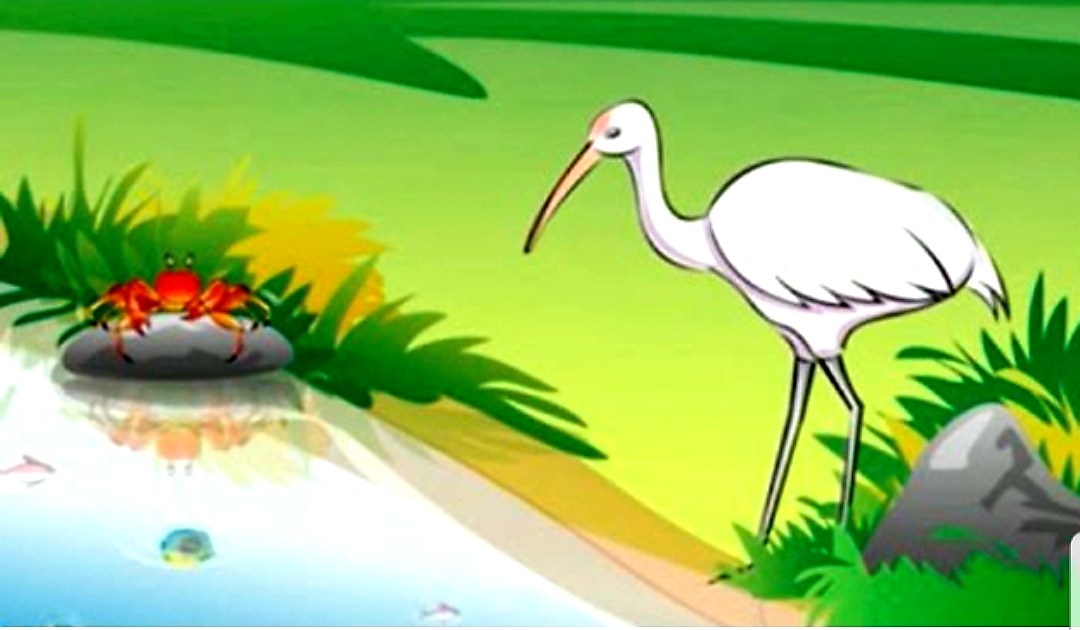
 The Cunning Crane and the Crab

    Story Source: The Giant Crab, and the Other Tales from Old Indian by W.H.D. Rouse.  

    This story from the old Buddhist Jatake collection tells of a cunning crane and his almost brilliant plan of fooling dying fish to their deaths. This is true until a clever crab seeks help from the crane. The story teaches the basic moral of not getting outsmarted and fooled. It teaches you to always be smarter than your enemy. 

    This story had a very interesting plot line, which drew my attention. I chose this story for its moral theme and life lesson. It has a great meaning and I believe I can recreate a story that follows the same life lesson in order to get the point across. Instead of following the same exact plot line and recreating the same story with different characters, I want to focus on the moral value that is being taught.